Choosing the right plaster for your walls is a crucial decision in both residential and commercial construction. The type of plaster you select impacts the durability, finish, and overall appearance of a room. Whether you are working on a new build, a refurbishment project, or a commercial interior fit-out, understanding the differences between plaster types ensures a high-quality finish that meets the requirements of your project.
This guide outlines four of the most common plaster types used on walls today, their applications, and key considerations for professional use.
1. Bonding Plaster
Bonding plaster, also known as scratch coat plaster, is typically applied over rough surfaces such as brick or concrete walls. Its primary purpose is to provide a strong adhesive base for finishing plasters like skim coats or finishing plaster.
Key features:
- Ideal for uneven or rough masonry walls
- Provides excellent adhesion for subsequent plaster layers
- Commonly used in both new build and refurbishment projects
Bonding plaster is an essential part of the wall preparation process, particularly in drylining systems where a consistent and stable base is required.
2. Finishing Plaster (Skim Coat Plaster)
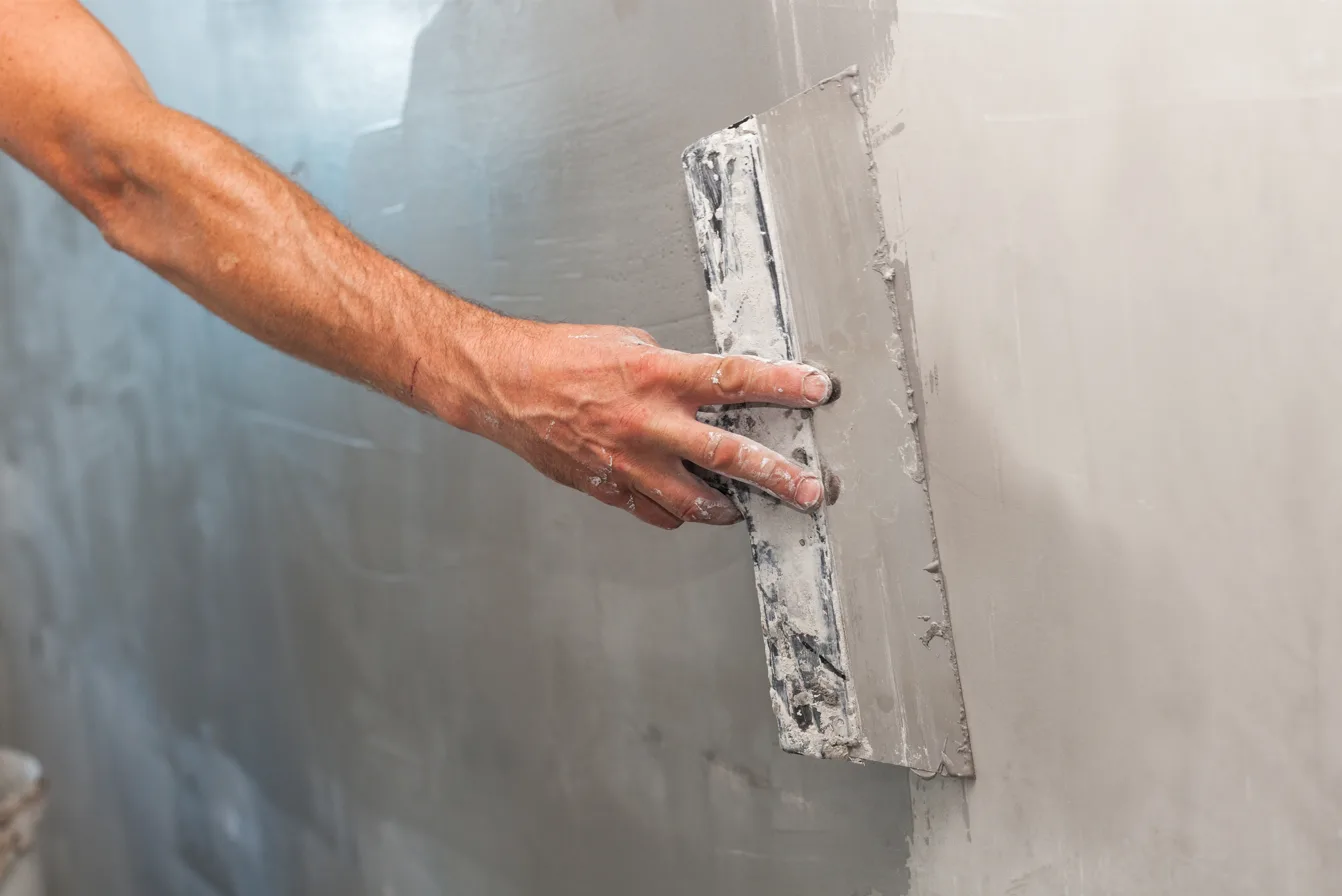
Finishing plaster, or skim coat plaster, is used to create smooth, uniform wall surfaces ready for decoration. It is applied in thin layers and is ideal for covering joints, imperfections, or prior plaster layers.
Applications:
- Preparing walls for painting or wallpapering
- Completing drylined walls and metal stud partitions
- Commercial and residential projects requiring a flawless finish
Finishing plaster is often the final step in wall preparation, offering a polished, professional appearance that enhances the quality of interiors.
3. Lime Plaster
Lime plaster is a traditional plaster made from lime, sand, and water. It is breathable, allowing moisture to escape, which makes it ideal for older buildings or restoration projects.
Advantages:
- Promotes healthy wall environments by reducing damp and mould
- Flexible and less prone to cracking than modern cement plasters
- Can be used in both new build heritage-style projects and commercial refurbishments
Lime plaster is particularly suited for renovation projects where wall breathability and long-term performance are priorities.
4. Cement Plaster
Cement plaster is a durable, robust plaster commonly used in both internal and external applications. It is ideal for areas that require a strong, impact-resistant finish, such as utility rooms, commercial interiors, or new build developments.
Characteristics:
- Highly durable and resistant to moisture
- Suitable for rendering exterior walls as well as internal surfaces
- Often combined with bonding plaster to achieve smooth finishes
Cement plaster is commonly specified for commercial projects or high-traffic areas where wall protection and longevity are critical.
Choosing the Right Plaster for Your Project
Selecting the appropriate plaster type depends on several factors:
- Surface type: Masonry, drywall, or previously plastered walls
- Project type: New build, commercial, or refurbishment
- Finish requirements: Smooth finish, breathable walls, or impact resistance
- Environmental considerations: Moisture levels and ventilation
Working with experienced plastering contractors ensures the right material and technique are chosen for each application. In regions like Hampshire, Berkshire, Oxfordshire, South London, Sussex, Buckinghamshire, and Surrey, local expertise is particularly valuable for both commercial and residential projects.
Final Thoughts
Understanding the differences between bonding plaster, finishing plaster, lime plaster, and cement plaster allows you to make informed decisions for your walls. Each type serves a distinct purpose, whether it’s providing a strong base, a smooth finish, or enhanced durability.
When combined with professional drylining, metal stud partitioning, and proper surface preparation, selecting the right plaster ensures a high-quality, long-lasting result for both new builds and refurbishments.